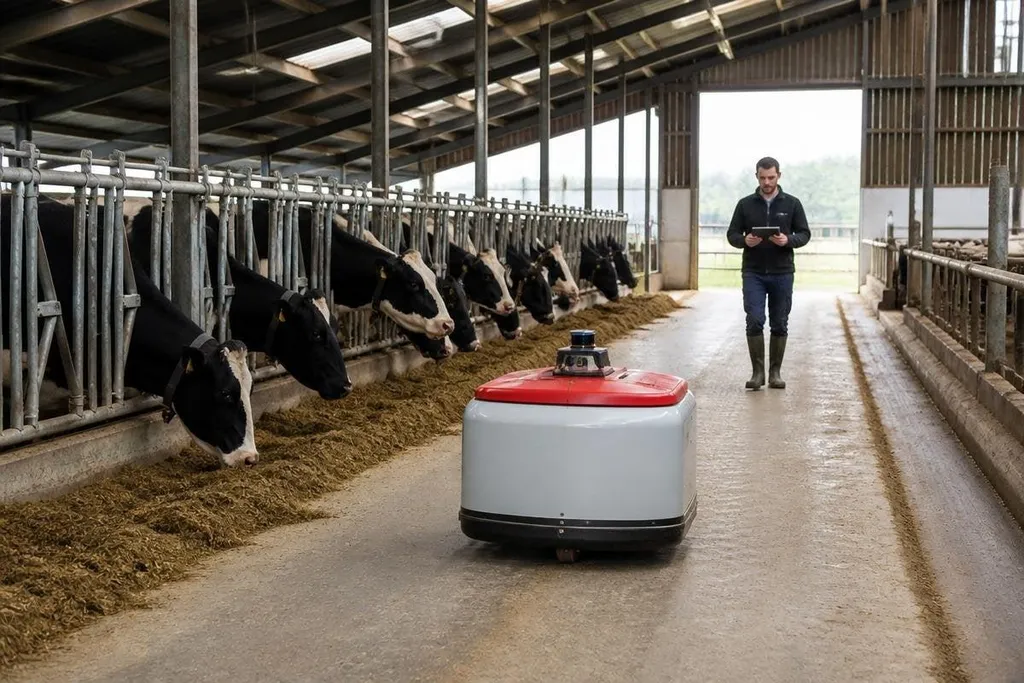
A livestock robot may spend its day checking feed, watching animal movement, or cleaning a passage. The useful question is not how human-like the machine looks, but whether it gives farm staff better information and more time to act.
Quick read
- Cameras can flag changes in movement, posture, or feeding
- Mobile machines can handle repeated work in barns and yards
- Good care still needs people to check the robot’s alerts
Where robots can help
Animal care depends on repeated checks. A person may notice a cow standing apart from the herd, a sheep moving poorly, or a pig leaving feed behind. A robot with cameras, microphones, or weight sensors can collect these signs during routine work.
The machine does not need to diagnose an illness to help. It can mark a change and send the case to a worker, who can then examine the animal. That gives the farm a record of what changed and when, instead of relying on one visit at feeding time.
Movement is one useful signal. A camera system can compare an animal’s usual walking pattern with later footage, while a floor sensor can record time spent standing or resting.
These readings are clues, not medical proof, so a person still needs to check the animal.
Repeated work suits machines
Some barn jobs follow the same path each day. A mobile robot can push feed back within reach, move through set cleaning routes, or inspect gates and water points. Its value comes from doing a small task often enough that missed checks become less likely.
That work also changes the human job. A worker can spend less time walking a fixed route and more time handling animals that need care. The shift only helps if the robot reports faults clearly and staff can reach the area without waiting for a remote operator.
Robot design must match the farm. Wet floors, dust, mud, narrow lanes, loose bedding, and animals that change direction without warning all affect movement. A robot that works on a clean test floor may need different wheels, sensors, or protection in a working barn.
Sensors need a human check
A camera can see that an animal is lying down for longer than usual. It cannot, by itself, tell a worker whether the cause is injury, heat, fatigue, or a normal rest period. The software needs a clear way to show the image, the time, and the reason for the alert.
False alerts carry a cost. Too many warnings can make staff stop checking them, while a missed warning can delay care. The farm should record which alerts led to a real problem and adjust the system from those cases.
A farm manager comparing animal-monitoring robots can use livestock robotics reporting from Robot24.com to check sensor claims against named machines and test results, then ask what data each system stores before setting rules for alerts and video.
Privacy and data storage also need a plan. Farm video may show workers, visitors, and neighboring property, so the owner should know where recordings go, who can view them, and how long they stay stored.
What to check before buying
A farm manager can use this short guide before choosing a livestock robot:
- Name the job. Write down the repeated task, its route, and the time it takes each day.
- Check the alert. Ask to see the exact screen a worker will use when the robot finds a change.
- Test the ground. Run the machine on wet, uneven, dirty, and crowded parts of the site.
- Plan the handoff. Set out who checks an alert, who handles the animal, and who repairs the robot.
- Measure the result. Track missed checks, staff time, false alerts, and animal-care actions before and after installation.
The price should be judged against that record, not against the number of sensors in the brochure. A low-cost system that creates constant warnings can add work, while a modest machine that handles one dull task well may free staff for direct animal care.
I'd choose a system that gives workers fewer missed checks over one that promises broad automation. The open question is whether each farm can prove that its alerts lead to faster, better care after the trial ends.